I have owned three robot vacuums in four years, and I live with a husky and a lab, which means my floors produce roughly one extra dog of hair every week. So when someone asks me for a robot vacuum comparison, I open with the same line I always open with: it is not a replacement for your real vacuum. It is a maintenance tool. The real question is never "does it clean perfectly," it is "does it clean often enough, without me rescuing it, to keep the floor livable between actual vacuuming sessions."
That framing matters more than anything printed on a box, because the four bots below sit in very different price brackets and they are not all chasing the same job. One is a flagship with more navigation hardware than my first two robots combined. Two are budget machines that lean on gyro navigation, which is the difference between a robot that knows your floor plan and a robot that just drives confidently in a direction until something stops it. One splits the difference with actual LiDAR mapping at a price that would have been fantasy three years ago.
Related: LiDAR vs Random Navigation Explained
The best value for most people here is the Bagotte Robot Vacuum and Mop Combo, because LiDAR mapping and auto-recharging at a budget price change how much you babysit the thing. The roborock Saros 20 is the best machine in the group by a wide margin, and I will not pretend otherwise, but you are paying flagship money for polish that only pays off if navigation frustration is your main complaint. The two gyro bots are honest budget picks with honest budget limits.
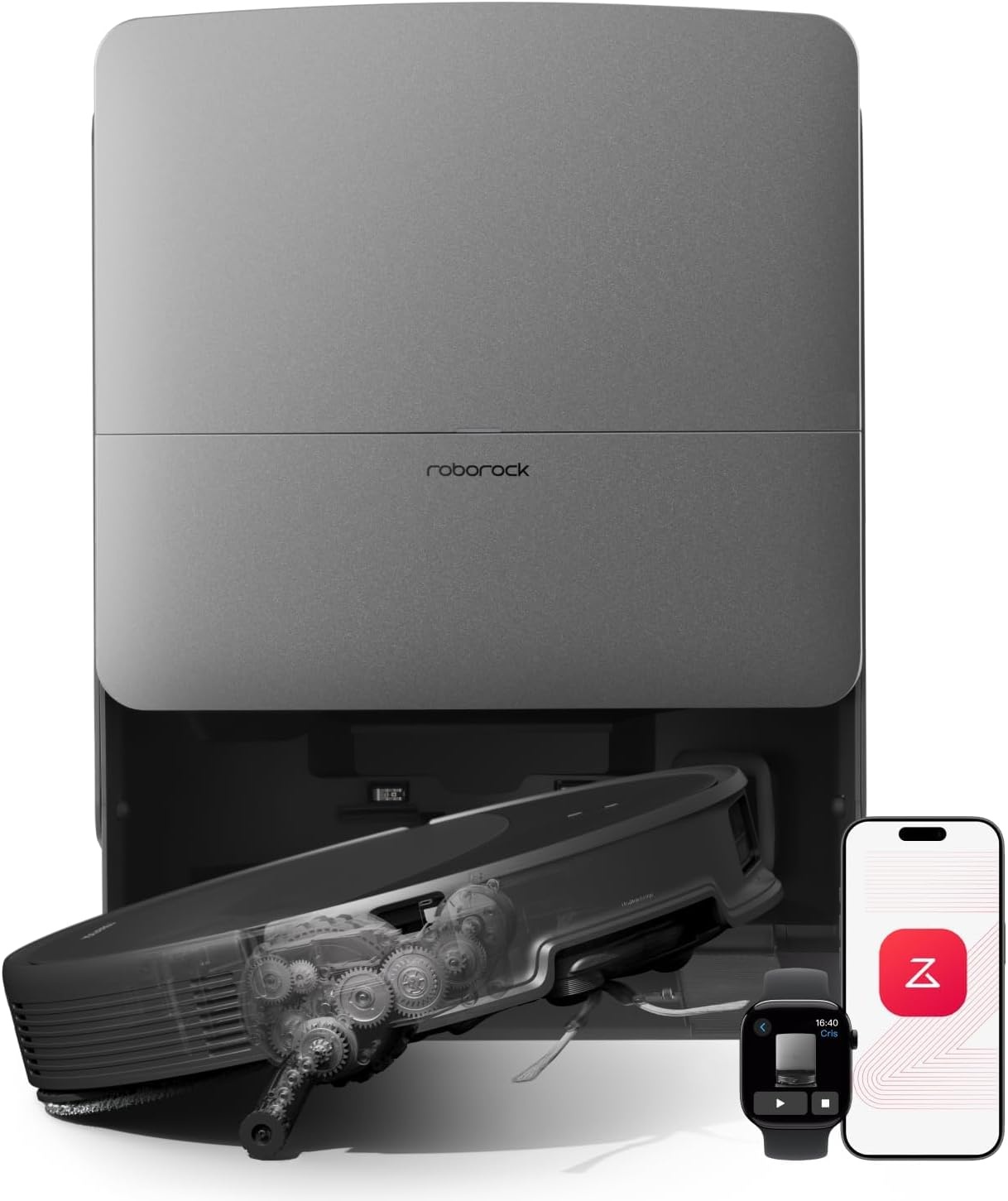
roborock Saros 20 Robot Vacuum and Mop, 36000 Pa, 300+ Obstacle Avoidance
36000 Pa suction and 300+ obstacle avoidance, the most capable navigation and pickup in this group by a clear step
Sits in a completely different price bracket, and most of that capability is wasted on a small, tidy floor
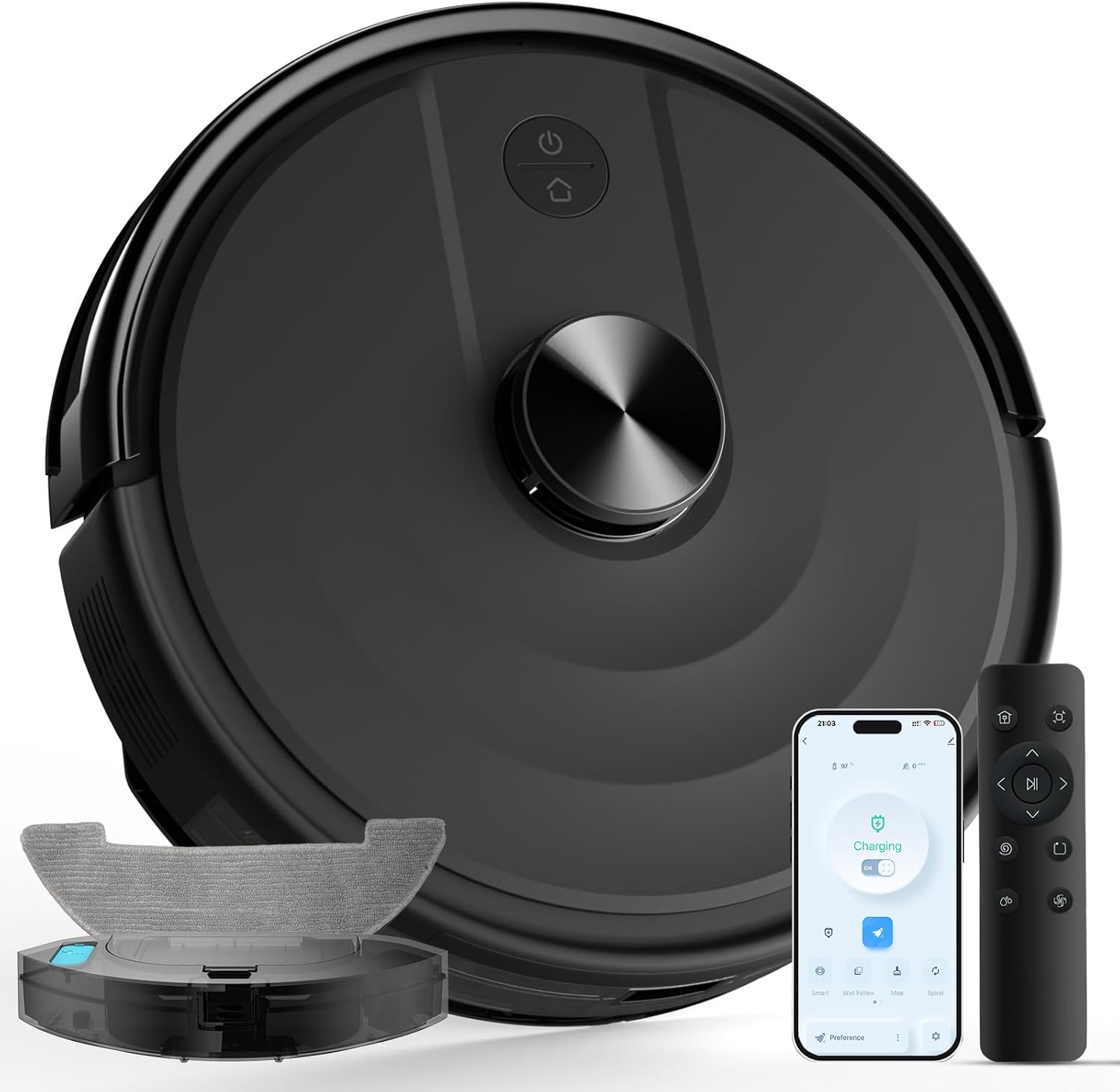
Bagotte Robot Vacuum and Mop Combo, 6000Pa, LiDAR Navigation, Auto-Recharging
Real LiDAR mapping and auto-recharging at a budget price, plus app, Alexa, and remote control
6000Pa is mid-pack on paper, and there is no self-empty dock to skip the bin duty
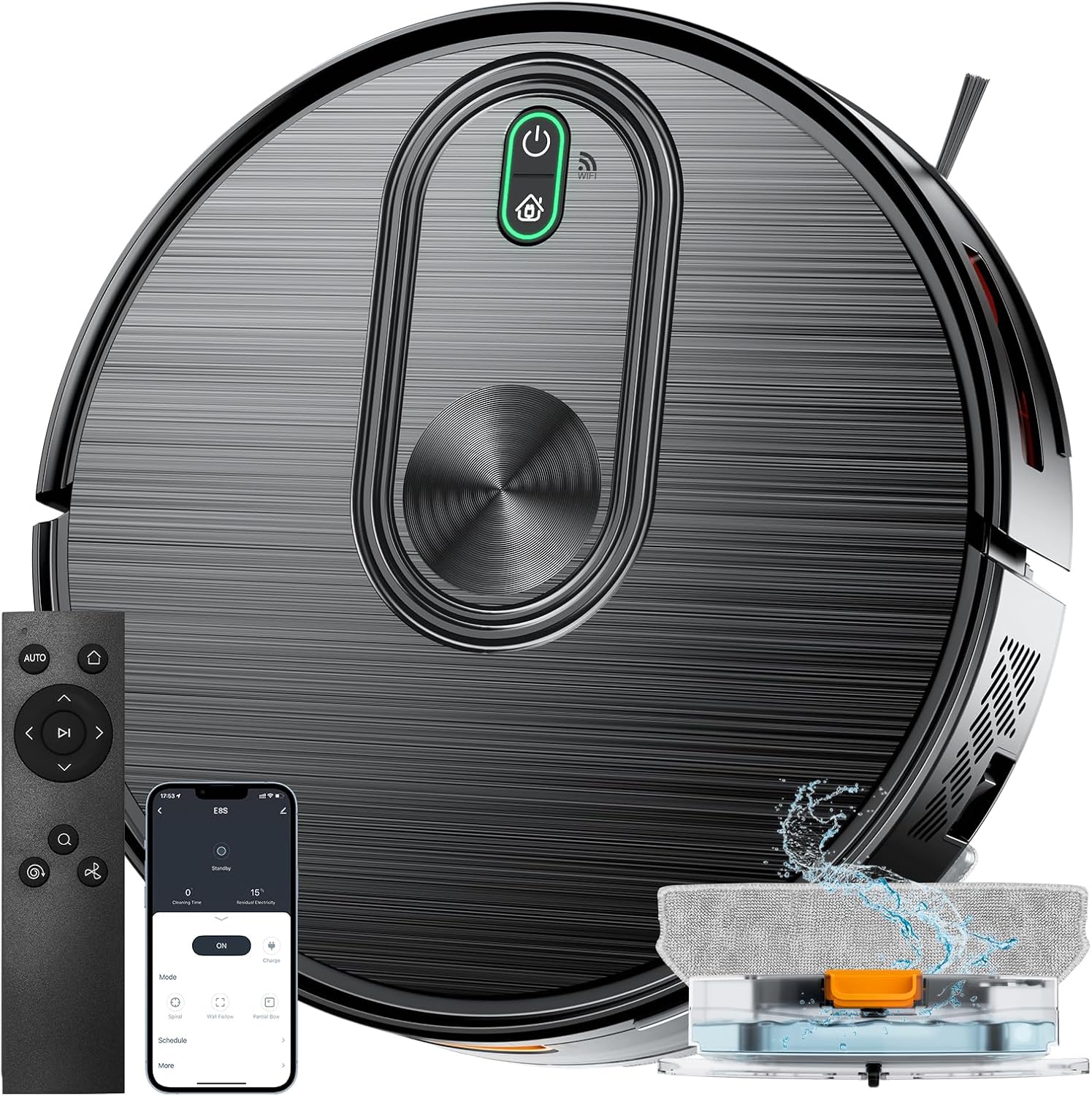
Robot Vacuum and Mop, 6500Pa Suction, Gyro Inertial Navigation, 200 Min Runtime
6500Pa suction and a 200 minute runtime, the longest single-charge window in this comparison
Gyro inertial navigation means no true map and no no-go zones, so you will still be pulling it out of places
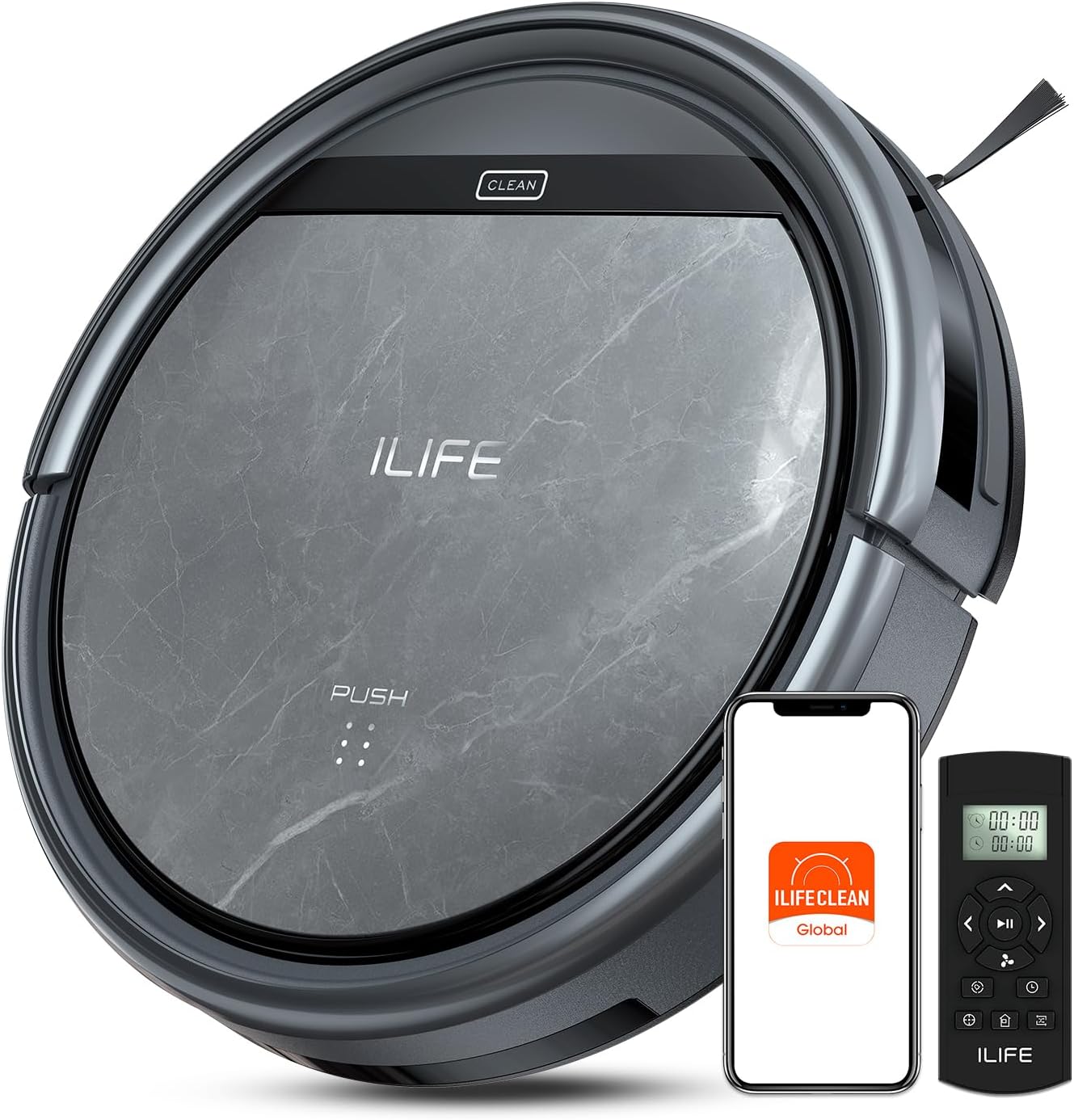
ILIFE V5s Max Robot Vacuum, 4000Pa Strong Suction, Gyro Navigation
The lowest entry point here, and the simplest machine to live with if you just want daily hair pickup
Lowest suction in the group, gyro navigation only, and no mopping function listed at all
Prices and availability were captured from Amazon Creators API and may change.
What actually matters in this comparison
Suction numbers sell robots and navigation numbers keep them out of your evening. I have said this for years and I will keep saying it: a 4000Pa bot that maps your house and finds the dock is more useful than a 10000Pa bot that wedges itself under the sofa table twice a week. The suction spec tells you what it picks up on a pass. The navigation spec tells you whether it completes the pass at all.
So here is the split in this group. Two of these robots use gyro inertial navigation, which keeps them tracking their own movement and covering ground in a systematic pattern rather than the drunk zig-zag of the old random-navigation bots. That is a real improvement over the $90 bouncer I started with. But gyro alone does not build a map you can edit. There are no no-go zones, no room-by-room scheduling, and no "go clean the kitchen only" command.
The other two use LiDAR or advanced obstacle sensing, which is the technology that actually lets a robot know where it is. That is the line I care about most in any buying decision. Once a robot has a map, everything else improves: it stops re-covering the same corner, it stops skipping the hallway, and it stops eating the same phone cord on every run.
The second thing that matters is runtime, and this is where the 6500Pa machine stands out with a claimed 200 minutes. In the real world, a claimed runtime means "most of my main floor on one charge" if you are lucky. A short runtime on a big floor means the robot goes home half finished, recharges, and resumes, which is fine but slow.
The third thing is mopping, and I need to be blunt. Robot mopping is light maintenance. It handles everyday footprints and dust film. It does not touch a dried-on stain or a sticky spill. Three of these four list mopping, and none of them replaces a mop. If you expect deep cleaning from a water tank on wheels, you will be disappointed no matter which one you buy.
The flagship: roborock Saros 20
The roborock Saros 20 is the machine in this comparison that behaves like a finished product. 36000 Pa of suction and 300+ obstacle avoidance is not a marginal upgrade over the budget tier, it is a different category of hardware. The obstacle avoidance number is the one I would stare at, because avoiding obstacles is the single hardest thing for a robot to do in a house with dog toys, charging cables, and a sofa table that has eaten more bots than I want to admit.
If you have been running a budget bot for a couple of years, you know the routine. You walk into the room mid-cycle, find it beached on a rug transition or tangled in a cord, untangle it, hit resume, and quietly accept that this is your life now. The pitch for a flagship is that the routine mostly disappears. Higher suction also matters more than people think on low-pile carpet, where fine pet hair works its way down into the fibers and a weak bot just polishes the surface.
The catch is the price. This bot costs more than the other three in this comparison combined, and it does not clean four times better. It navigates better, it avoids better, and it needs less supervision. Whether that is worth flagship money depends entirely on how much your current robot annoys you.
The LiDAR value pick: Bagotte Robot Vacuum and Mop Combo
If I had to hand one of these to a friend with two dogs and a normal budget, this is the one. LiDAR navigation plus mapping at a budget price is the sweet spot of the entire robot vacuum market right now, and it is the recommendation I give most often.
Mapping is what turns a robot from a novelty into a tool. With a map you can fence off the dog bowls, block the tangle of cables behind the TV stand, and send the robot to one room instead of the whole floor. You can also see, in the app, where it actually went, which is how you find out that the hallway you thought was being cleaned has been skipped for three weeks.
The 6000Pa suction figure sits in the middle of this group, above the ILIFE and below the other two, and on hardwood with daily pet hair that is plenty. Auto-recharging means it returns to the dock on its own when the battery drops and picks up where it left off, which matters more than people expect on a long floor. App, Alexa, and remote control cover every way you might actually want to start a clean.
The honest limitation: there is no self-empty dock here. You will be emptying the bin, and with two shedding dogs that is a every-couple-of-days job, not a monthly one.
The long-runtime middle: 6500Pa gyro vacuum and mop
This one wins on two numbers: 6500Pa suction and a 200 minute runtime. That runtime is the longest in this comparison by a wide margin, and on a single-story house it is the spec that means "one charge covers the whole main floor" rather than "one charge covers the front half and then it naps."
It is a 2-in-1 vacuum and mop, it supports app, remote, and voice control, and it is explicitly pitched at pet hair, hard floor, and carpet, which is exactly the mix in my house. For a hardwood living area with low-pile carpet bedrooms, that is the right target.
The catch is the navigation. Gyro inertial navigation is systematic, not random, so it will cover your floor in organized passes rather than bouncing off walls. But without LiDAR there is no true map, which means no no-go zones and no room targeting. The cable behind the TV stand stays in play. The rug transition it decides to climb stays in play. You get the coverage, you just do not get the control.
If your main floor is open, relatively uncluttered, and you want the longest run time in the group, this is a reasonable pick. If your house has a lot of stuff on the floor, spend the extra on the Bagotte.
The budget floor: ILIFE V5s Max
The ILIFE V5s Max is the cheapest way into this comparison, and it is the one I would point a first-time buyer toward if they are not sure a robot vacuum fits their life. 4000Pa of suction and gyro navigation, and that is basically the whole story.
Here is the fair way to judge a bot in this bracket. Do not expect flagship performance. Expect daily hair pickup on hard floor, expect it to need help occasionally, and expect to be home when it runs. A 4000Pa machine on hardwood with dog hair is genuinely useful. On carpet with embedded fine hair, it is a surface pass, and you will still run your real vacuum.
Note what is missing: there is no mopping function listed here, so if you want the light-maintenance mop pass on your kitchen tile, this is not the one. The trade is simplicity and price. Fewer features means fewer things to configure, and for someone who just wants the floor less hairy every day, that is not a bad trade at all.
The trade-offs nobody puts on the box
Every robot in this comparison needs something from you, and the differences are about how much.
Under the flagship tier, you should expect to be home when the robot runs, or at least nearby. Gyro navigation without mapping can still find trouble that mapping would have avoided, and a bot stuck in a cord for two hours is not cleaning. If you want to schedule a clean at 10 a.m. and leave for work, mapping is what makes that safe, and the LiDAR machine is the budget entry point for it.
Self-emptying is the other trade-off people misread. None of these four list a self-empty dock, so bin duty is on you. That is fine, and honestly it is the part of robot ownership that keeps you honest about what the thing is picking up. When you dump a bin of husky hair every couple of days, you know the robot is working.
Mopping deserves its own warning. Water tank mopping keeps footprints off a kitchen floor. It does not remove dried-on stains, and it does not replace the mop you keep in the closet. Buy a mopping robot for maintenance, not for deep cleaning, and you will never be disappointed by one.
Finally, the app. Every bot here has one, and every app wants an account and a firmware update before it lets you schedule anything. Budget apps are usually the weakest link in the package, not the cleaning hardware. If an app that fights you is a dealbreaker, budget accordingly.
Who should buy which
Buy the roborock Saros 20 if navigation frustration is your number one complaint and budget is genuinely not the constraint. 36000 Pa and 300+ obstacle avoidance is the closest thing here to a robot you can stop thinking about, and on a floor with two dogs, that quiet is worth something real.
Buy the Bagotte Robot Vacuum and Mop Combo if you want the best balance of price, mapping, and daily pet hair pickup. LiDAR mapping plus auto-recharging at a budget price is the combination that makes a robot feel like a tool instead of a toy, and this is the one I would recommend to most people reading this.
Buy the 6500Pa gyro vacuum and mop if runtime is your priority and your main floor is open and reasonably clear. 200 minutes on one charge is a genuine advantage on a big single-story layout, and the suction is second only to the flagship here.
Buy the ILIFE V5s Max if you want the lowest-cost way to find out whether a robot vacuum earns its spot in your routine. It is a daily hair-pickup machine on hard floor, and if it changes your life, you will know exactly what to upgrade to next.
The bottom line
A robot vacuum is a maintenance tool. It keeps the floor livable between real vacuuming sessions, and it earns its price by running often and needing nothing from you. In this group, the flagship earns that with hardware, the Bagotte earns it with mapping at a price that makes sense, and the two gyro bots earn it by being cheap enough that the occasional rescue mission is a fair trade.
Pick the one that matches how much babysitting you are willing to do, not the one with the biggest suction number on the box.