Related: Robot Vacuum No-Go Zones: How Smart Mapping Changes a Floor Plan
I have a husky and a lab, which means my house generates roughly one extra dog of hair every week, and I have been running robot vacuums for about four years. I am on my third unit. The first one was a cheap random-navigation bot that bounced off walls in a zig-zag, wedged itself under the sofa table on every single run, and eventually got driven around with my phone like an RC car just so it would finish a room. That machine taught me more about navigation than any spec sheet ever has.
So when I compare a self-emptying robot vacuum against a budget bot, I am not staring at the suction number printed on the box. I am asking whether it finds the dock from the back bedroom without me, whether it gets stuck on the same phone cord twice, and whether the bin survives a week of two-dog hair without clogging. That is the test, and it is the same test I apply to every model below.
The four robots here are the ones worth talking about right now. One is a mid-tier self-emptying unit with laser mapping. One is a budget bot that does the basics and does them cheaply. One is a suction monster. One sits at the premium end of the group, and I will be straight with you about what I can and cannot verify on it.
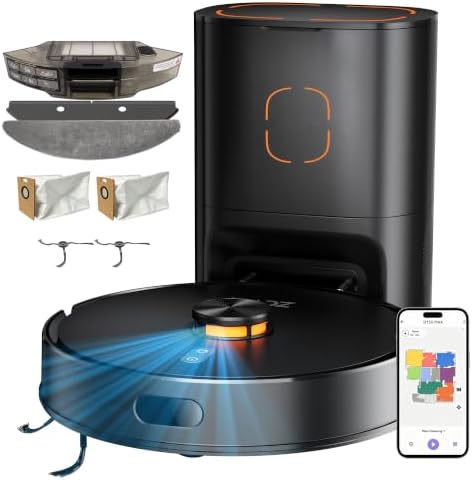
The mid-tier pick: 90-day self-emptying with dToF laser
This is where the mid-tier value lives. The listing states dToF laser navigation with smart mapping, which is the single feature I would pay for before I would pay for extra suction. A map means no-go zones. No-go zones mean you stop crouching behind the TV stand to untangle a robot from a nest of cables, and you stop watching it re-cover the same corner three times while skipping the hallway entirely.
Claimed runtime is 160 minutes, and on a ranch-style main floor that is more than a single pass needs. Claimed suction is 10,000Pa, and the dock is rated for 90 days of debris. It is also listed as a vacuum and mop combo, so you get the light-maintenance pass on top of the vacuuming.
The honest caveat is that "90-day" figure. That is 90 days of dirt, not 90 days of never touching the robot. Filters still clog and bags still fill. The anti-tangle claim on a husky coat is something you evaluate after a month of runs, not on day one. And like every robot mop, this one handles footprints and dust film, not dried-on stains or a sticky spill.
Who it is for: hardwood plus low-pile carpet, at least one shedding pet, and a genuine aversion to emptying a bin every day.
The budget pick: Lefant M210
The Lefant M210 is the entry point in this group. The listing claims 120 minutes of runtime, strong suction, a slim body, low noise, automatic self-charging, and Wi-Fi control through an app and Alexa. It is built for pet hair, hard floor, and daily cleaning, which is exactly the job description for a second robot, a small apartment, or a hard-floor-only home.
What you are not getting at this tier: a self-emptying dock, and any mapping claim the listing is willing to make. That means you empty the bin yourself, and you accept that this robot's idea of a floor plan is looser than a mapped bot's. At this price, that is the trade. Judge it as "good for the price" and it makes sense. Expect the behavior of a mapped, self-emptying machine and you will be annoyed by week two.
I keep one rule for budget bots: you will babysit it, so run it where you can see it. Start it while you are making coffee, not while you are at work. The slim body helps it get under furniture, 120 minutes is genuinely enough for a small floor, and the noise claim matters more than people think when the robot shares a room with the TV.
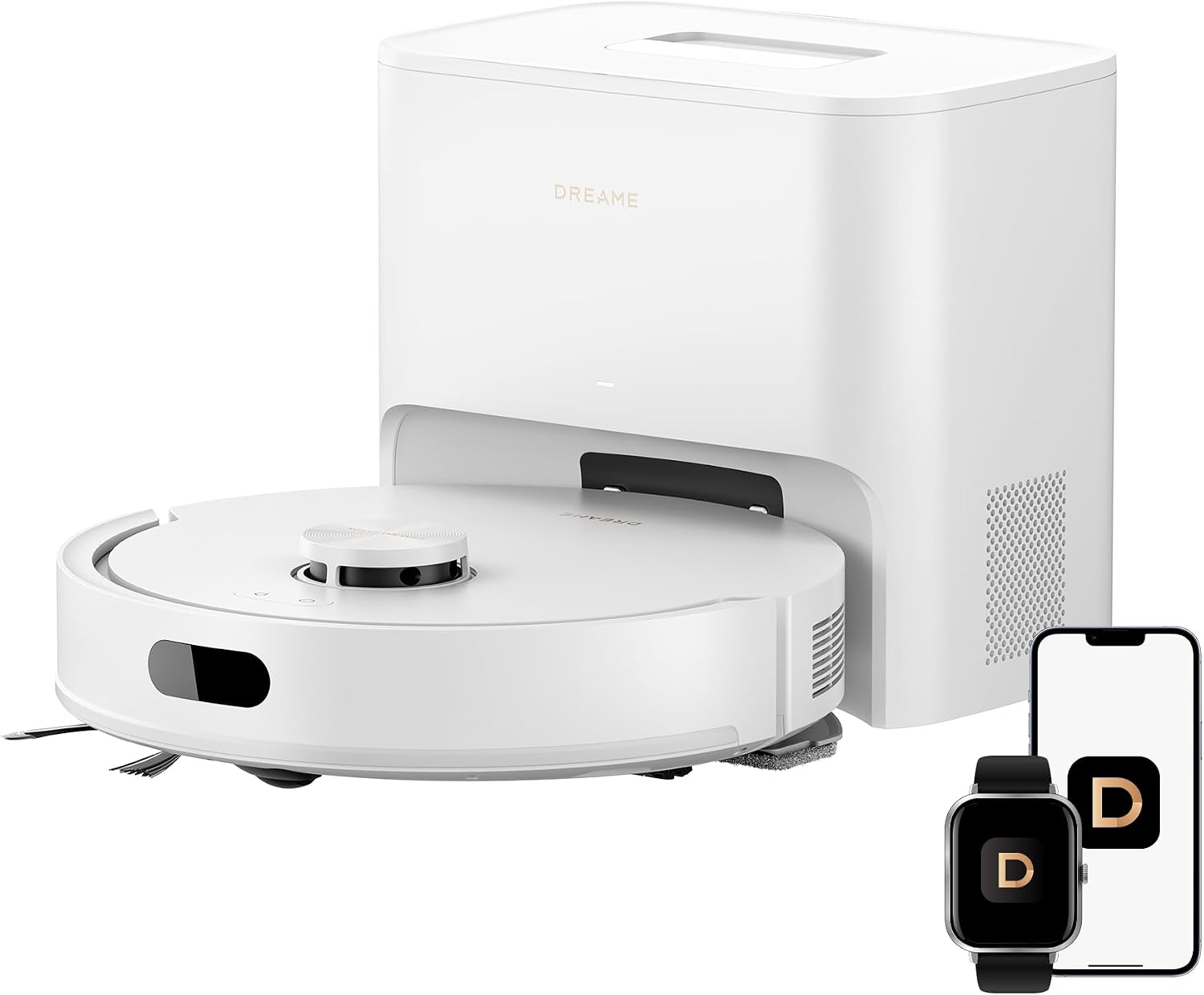
The suction pick: dreame D20 Air Plus
20,000Pa is the number that jumps off this listing, and it is the highest claimed suction in this group by a wide margin. It is a vacuum and mop, so you also get the light-maintenance pass over hard floor: it will lift footprints and dust film, and it will not remove a dried-on stain or a sticky spill. No robot mop does that, regardless of what the box implies.
What the listing does not state is a runtime figure or a dock specification, and I am not going to invent one for you. If a self-emptying dock and a stated runtime matter more to you than raw suction, the mid-tier pick above spells out both. If your bedrooms are low-pile carpet and your dog sheds in drifts, the suction figure is the reason to look here first.
Who it is for: carpet-heavy homes, and anyone whose current bot leaves a visible line of hair behind on the first pass.
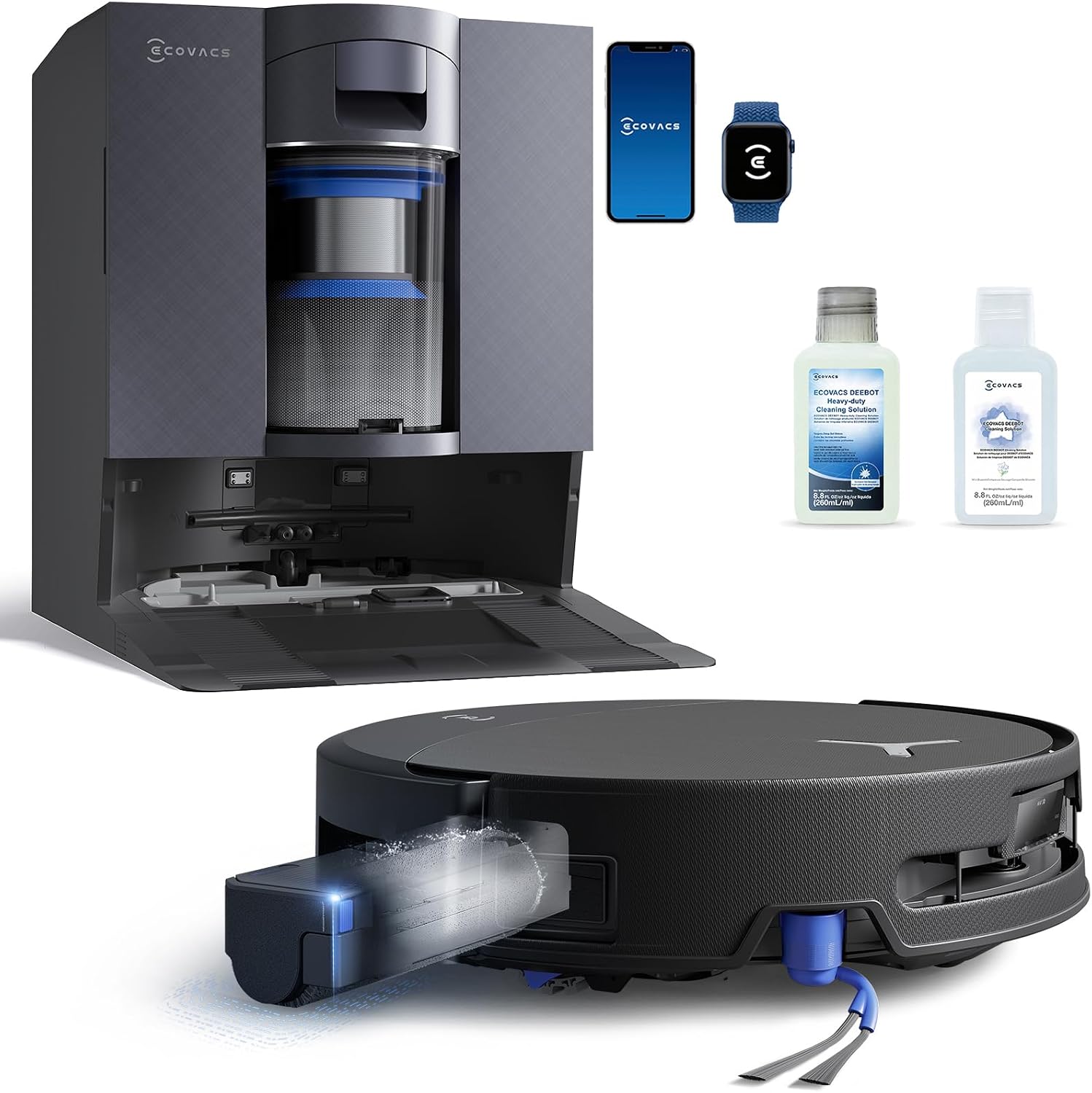
The premium pick: ECOVACS DEEBOT X11S OMNICYCLONE
This is the top of the group, and it is a robot vacuum and mop. Here is where I stay honest with you: the listing gives me the model name and the category, and that is what I will repeat. I am not going to quote a suction figure or a dock spec that is not printed on the page, because that is exactly how people end up disappointed by an expensive purchase they never actually compared.
What I can tell you is what this tier buys in general, and it is the same thing it buys from Roborock at the high end: polish. Better navigation behavior, an app that does not fight you, and a dock that handles more of the maintenance for you. You are not getting double the cleaning for the money. You are getting fewer evenings spent crouched behind the couch with a flashlight.
Who it is for: someone who has already owned a budget robot, knows precisely which parts of the routine drove them up the wall, and wants those parts gone. If this is your first robot vacuum, buy the mid-tier pick and learn what you actually hate before you spend here.
How I judge a robot vacuum
Every bot I recommend has to pass the same checks in my house: two dogs, phone cords left on the floor on purpose, rug transitions, and a sofa table that has eaten more robots than I care to admit.
- Dock-finding from the back bedroom, not the hallway. If it cannot navigate home from the farthest room, the map is a marketing document.
- The cord test. Same cord, same spot, twice. Once is bad luck. Twice is navigation.
- Pet hair over a week. Does the bin clog, and does the brush tangle?
- A single-charge run of the main floor. Runtime claims get tested, not quoted.
- Would I let it run while I am at work? Under $300, the honest answer is usually no.
That last one is the question that separates a convenience from a chore. A robot that needs rescuing every run is not saving you anything, no matter how good the suction number looks on paper.
What the specs actually tell you
Navigation beats suction. A 20,000Pa robot that re-covers the same corner three times and skips the hallway is a worse floor cleaner than a mapped bot with half the number. That is why dToF laser navigation and smart mapping are the first things I look for, and why a big suction figure on a machine that gets stuck on a phone cord is my least favorite sentence in this entire category.
Self-emptying is convenience, not autonomy. A 90-day dock is a real quality-of-life upgrade, and it is also a bag and filter maintenance schedule in disguise. You still touch the robot.
Mopping is light maintenance. Every one of these is a vacuum and mop. None of them is a mop. Footprints and dust film, yes. Dried-on anything, no. I still hand-mop my kitchen after the robot's pass, and I have made peace with that.
Runtime is floor-plan math. 120 minutes covers a small home. 160 minutes covers most of my main floor. Anything above that is headroom for a bigger house or a second pass, not a magic number.
The comparison table
Everything below comes straight off the listings, with "not stated in the listing" wherever the page does not give a figure. I would rather show you a gap than fill it with a guess.
| Model | Navigation | Claimed suction | Claimed runtime | Dock | Price |
|---|---|---|---|---|---|
 Visit on Amazon → Visit on Amazon →Robot Vacuum and Mop Combo, 90-Day Self Emptying |
dToF laser with smart mapping | 10,000Pa | 160 min | 90-day self-emptying | $769.99 |
 Visit on Amazon → Visit on Amazon →dreame D20 Air Plus |
Not stated in the listing | 20,000Pa | Not stated in the listing | Not stated in the listing | $227.99 |
 Visit on Amazon → Visit on Amazon →ECOVACS DEEBOT X11S OMNICYCLONE |
Not stated in the listing | Not stated in the listing | Not stated in the listing | Not stated in the listing | $799.99 |
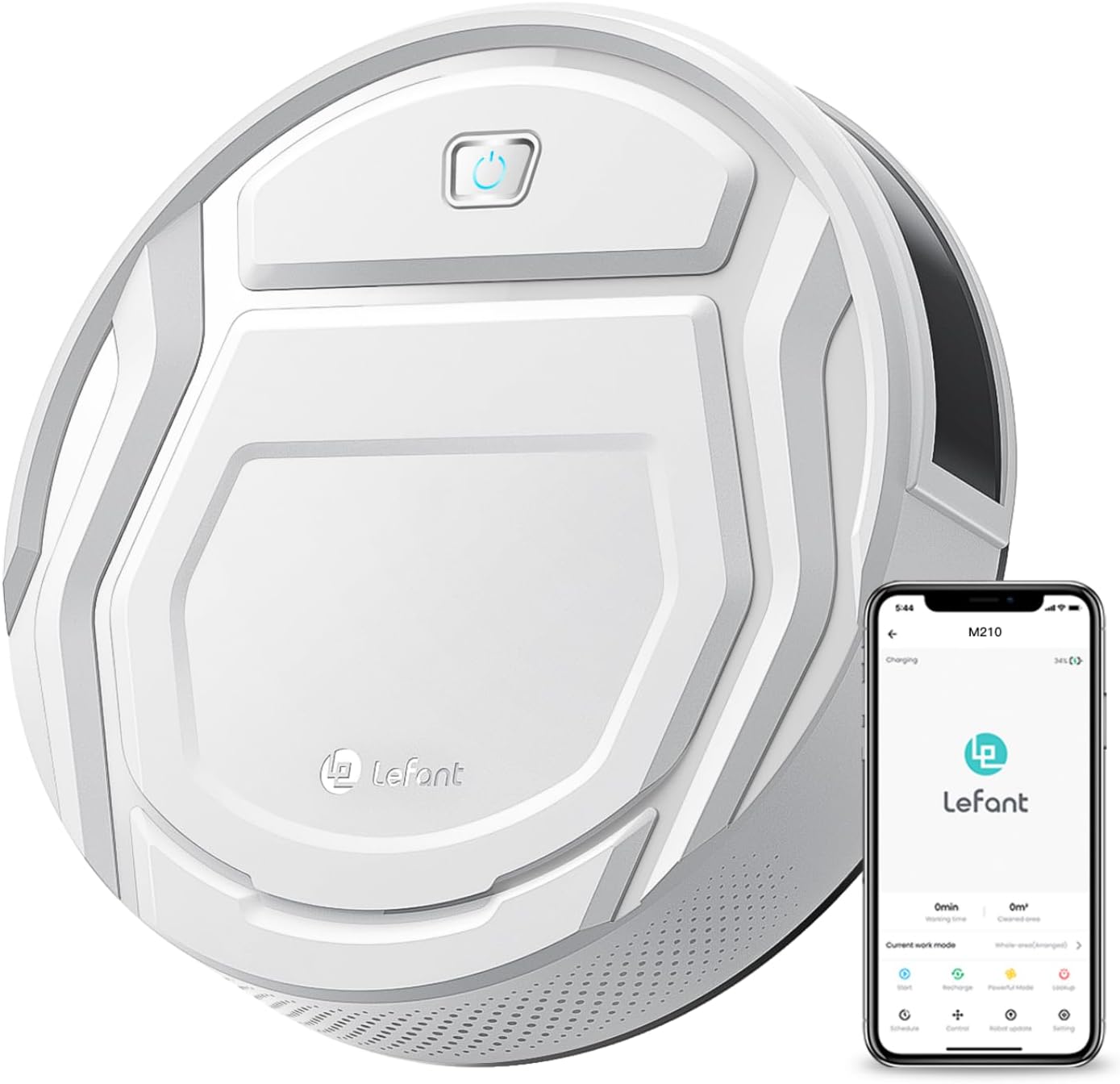 Visit on Amazon → Visit on Amazon →Lefant M210 |
Not stated in the listing | Strong suction, no figure given | 120 min | Self-charging, not self-emptying | $89.99 |
The pattern in that table is the whole story of this category. The cheapest bot states the least. The mid-tier bot states the most. The most expensive bot in the group tells you the least about itself in the product name, which is why you read the listing before you read the brand.
Should you buy the 90-day self-emptying robot vacuum?
Yes, for most people reading this. It is the only model here that states dToF laser navigation, smart mapping, a 90-day dock, 10,000Pa of suction, and 160 minutes of runtime in one listing, and that combination is where the mid-tier value lives. Navigation first, dock convenience second, suction third. That is the order I would spend money in, and this machine matches it.
The caveats are real: the dock needs filter and bag attention, the anti-tangle claim deserves a month of husky hair before you trust it, and the mop is light maintenance. None of that changes the math for a home with hardwood, low-pile carpet, and a dog.
Should you buy the Lefant M210?
Yes if this is a second robot, a small apartment, or a hard-floor home and you want to spend as little as possible. 120 minutes of claimed runtime and a slim body cover a lot of small-space cleaning, and the app plus voice control is more than most budget bots offer.
No if you want a dock that empties itself or a map you can draw no-go zones on. Those are the two things this tier does not include, and they are the two things that decide how much you babysit the machine.
Should you buy the dreame D20 Air Plus?
Yes if suction is your priority and your floors are mostly low-pile carpet. It is the strongest claimed suction in this group, and it is a vacuum and mop on top of that.
Before you buy, check the listing for runtime and dock details, because neither is printed in the product name. If those two things matter more to you than the suction figure, the mid-tier pick above is the safer buy.
Should you buy the ECOVACS DEEBOT X11S OMNICYCLONE?
Only if you have already owned a robot and know what you are paying for. The polish at this tier is genuine: better navigation behavior, a calmer app, a dock that carries more of the maintenance. But the gap between this and the mid-tier pick is not a cleaning gap, it is a convenience gap, and you should decide with your eyes open.
Read the listing, not the brand name. If you cannot point to the exact annoyance you are trying to eliminate, you are not ready for this price bracket.
The bottom line
It is not a replacement for your real vacuum. It never has been, and anyone who tells you otherwise has not owned one for a year. What a robot vacuum does is keep the floor at a baseline so your real vacuum has less to do, and it does that job best when it can navigate, find its dock, and survive a shedding dog without clogging.
Buy navigation before suction. Buy a self-emptying dock if you hate emptying bins, and accept that it is convenience rather than freedom. And if you are shopping under $300, go in knowing you will babysit the machine, because that is the honest trade at that price.