Related: Robot Vacuum Navigation: LiDAR vs Random Bounce
A self-emptying robot vacuum is the upgrade that finally makes the thing feel like an appliance instead of a chore. You run it, it goes back to its dock, the dock sucks the bin dry, and you stop thinking about dog hair for a few weeks. That is the pitch, and on a good machine it mostly holds up. On a bad one you have bought yourself a second bin to maintain and a robot that still cannot find its way out of the hallway.
I have run robot vacuums in a ranch house with hardwood, tile, and low-pile carpet for about four years, with a husky and a lab who together shed roughly one extra dog per week. I have pulled bots out from under the sofa table more times than I want to admit, and I once drove one around with my phone like an RC car just to finish a room. So when I look at a self-emptying model, I am not reading the suction number first. I am asking three questions: can it find the dock from the back bedroom, does it get stuck on the same phone cord twice, and does the bin survive a week of two-dog hair? Everything else is marketing.
Here are four current models, from a budget entry point up to a flagship dock, and what each one is actually for.
What a self-emptying dock actually buys you
A self-emptying dock is a convenience, not a robot that never needs you. The dock pulls the contents of the bin into a bag or canister, so you go from emptying a bin every day or two to swapping a bag every few weeks. You still clean the filter, you still cut hair off the brush roll, and you still pull the robot out from under the couch when it gives up.
Where the dock earns its money is consistency. If you have pets, the bin fills fast, and a full bin means the robot quietly does a worse job for the rest of the run. A dock removes that failure mode. That is the real argument for spending up.
What the dock does not fix is navigation. A self-emptying base bolted to a robot that wanders randomly is a self-emptying base bolted to a robot that wanders randomly. LiDAR mapping and no-go zones change how much you babysit the machine far more than suction does. That is why the middle of this lineup is the interesting part.
Tapo RV50 Pro Omni: the polished pick
The Tapo RV50 Pro Omni is the model I would point at a household that wants the whole package to feel finished. It is a robot vacuum and mop combo with a self-emptying dock, and it sits in the price bracket where you are paying for the dock, the app, and the polish as much as for the cleaning itself.
That is the honest trade at this tier, and it is true of every premium robot I have lived with. You do not get double the cleaning for double the money. What you get is a machine that does the boring parts without drama: it returns to the dock, it holds a map, and it asks less of you. The cleaning is better than a budget bot, but the gap is smaller than the price gap. I have said this about the expensive names for years and it keeps being true.
Before buying this one, I would want three things confirmed: that it maps rather than bumps, that the dock is a genuine self-empty and not a charging stand with a bag on top, and that the mop is the light-maintenance kind. Every robot mop in this class is light maintenance. It handles footprints. It does not handle dried-on stains.
MONSGA Robot Vacuum and Mop Combo: LiDAR and a 3.5L station
This is the spec sheet that makes the most sense to me in this lineup. 6000Pa of suction, LiDAR navigation, a 3.5L self-emptying station, 180 minutes of runtime, app, remote, and voice control, with the listing calling out hard floors and carpets.
LiDAR is the part that matters. My first robot was a cheap random-navigation unit that bounced off walls in a zig-zag, wedged itself under the sofa table every single run, and skipped the hallway entirely. LiDAR is what turns a robot into something that knows where it is. With a map you get no-go zones, and no-go zones are how you fence off the dog bowls and the cable nest behind the TV stand without rearranging your furniture.
180 minutes of claimed runtime is a real number for a house like mine. My main floor eats most of a 150-minute charge on my daily driver, so this should be a one-charge job on hardwood and low-pile carpet. Claimed runtime is not real runtime, though. Carpet, boost modes, and a loaded bin all take their cut.
The 3.5L station is the other number worth reading. That is a big canister, which means weeks between empties rather than days, and it is why a self-emptying dock makes sense at this price instead of only at the top of the market.
Tikom Robot Vacuum and Mop with Self-Emptying Base
Tikom is the brand I have the most seat time with. My daily driver is a Tikom, and the thing I keep coming back to is how easy the bin and water tank are to empty. That sounds like a small thing until you have owned a robot where it is a wrestling match every single time.
This model is a robot vacuum and mop with a self-emptying base, which puts it in the same conversation as the MONSGA on paper. The difference lives in the details you cannot read off a listing: how well it maps, whether it finds the dock from the far bedroom, and how the base handles a week of pet hair without clogging. Those are the things that separate two robots with near-identical spec sheets, and they only show up after a few weeks in a real house.
If you already own a Tikom and like it, this is the natural upgrade path, because the app and the maintenance routine will feel familiar. If you are starting fresh, compare it directly against the MONSGA on navigation and dock capacity, because that is where the two will actually differ.
ILIFE V5s Plus: the entry point
The ILIFE V5s Plus is the budget door into this category. It is a robot vacuum and mop combo, and the listing does not advertise a self-emptying dock or a mapping system, which tells you most of what you need to know about where it sits.
That is not a knock. A cheap robot that vacuums and wipes a hard floor is a real tool, and for a small apartment with no pets it can be a genuinely good first buy. What you accept at this end is supervision. Under a few hundred dollars you will be home when it runs, you will pull it off a rug transition, and you will empty the bin yourself.
Judge it the only fair way to judge a budget robot: for the price. Expect it to keep everyday dust and crumbs off a hard floor, not to replace your real vacuum, and not to map your house. If that is your expectation, it will probably make you happy. If you want it to run while you are at work, save for the LiDAR models above.
The four models side by side
| Model | What the listing claims | Dock | Best for | Price |
|---|---|---|---|---|
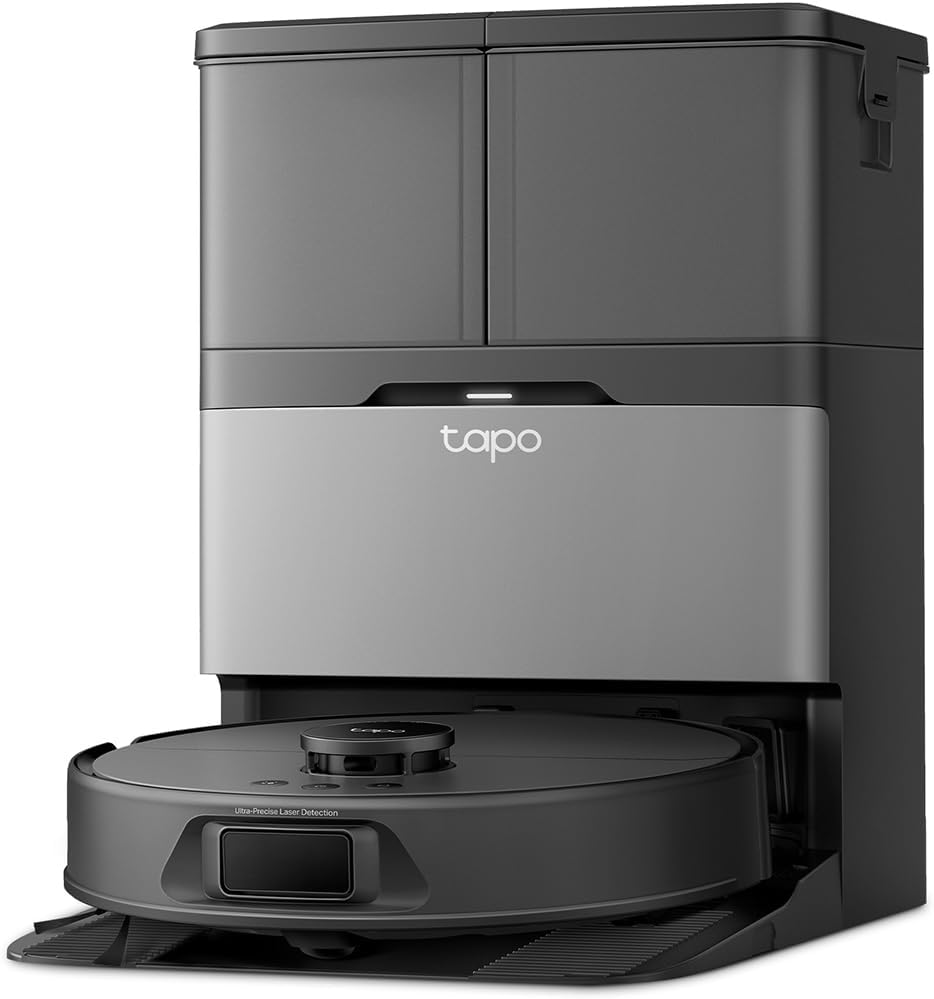 Visit on Amazon → Visit on Amazon →Tapo RV50 Pro Omni Robot Vacuum and Mop with Self-Emptying Dock |
Robot vacuum and mop combo | Self-emptying dock | A household that wants the polished, hands-off package | $599.99 |
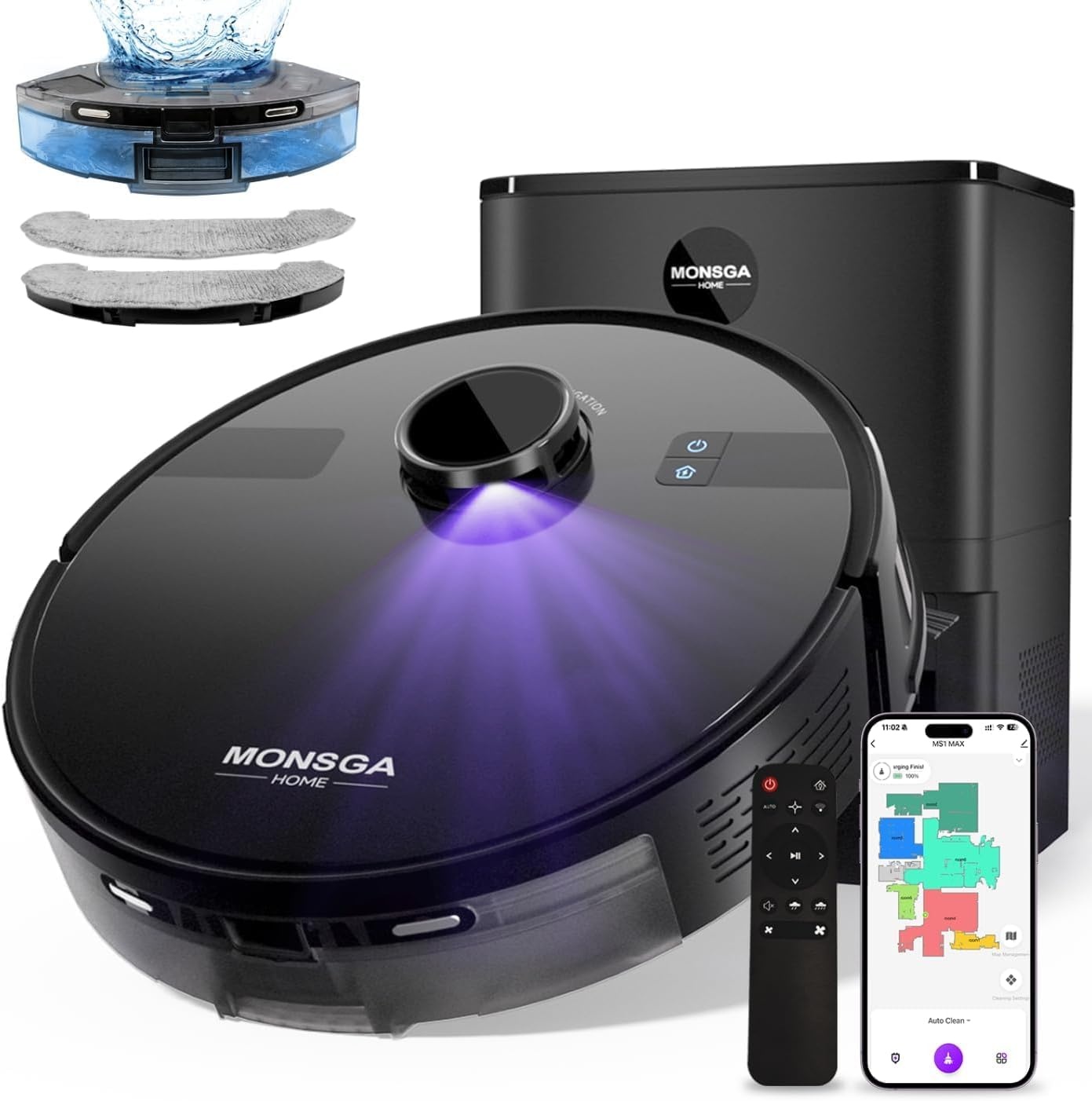 Visit on Amazon → Visit on Amazon →MONSGA Robot Vacuum and Mop Combo |
6000Pa suction, LiDAR navigation, 180 minutes runtime, app, remote, and voice control, hard floors and carpets | 3.5L self-emptying station | LiDAR mapping and no-go zones at the value end | $209.99 |
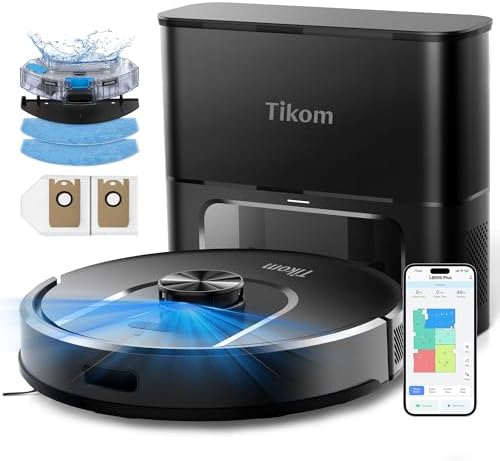 Visit on Amazon → Visit on Amazon →Tikom Robot Vacuum and Mop with Self-Emptying Base |
Robot vacuum and mop with a self-emptying base | Self-emptying base | Tikom owners and anyone who wants a simple dock | $249.99 |
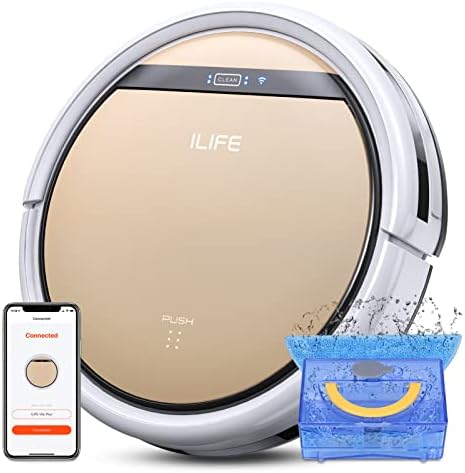 Visit on Amazon → Visit on Amazon →ILIFE V5s Plus Robot Vacuum and Mop Combo |
Robot vacuum and mop combo | None listed | A first robot for a small hard-floor apartment | $89.99 |
How I judge a robot vacuum
Five things, in this order.
Dock finding. Can it get back from the farthest room without me carrying it? A robot that dies in the hallway is a robot you stop using.
Stuck events. Phone cords, rug transitions, the sofa table. I leave them in place on purpose, because a tidy test floor is not a real floor.
Pet hair. Two shedding dogs is the test. If the brush roll turns into a rope by the end of a run, the suction number on the box was decoration.
The bin. Does it survive a week of dog hair without clogging? A self-emptying dock is only convenient if the path from bin to bag stays clear.
Mopping. A dried-on stain and a sticky spill. Every robot mop I have used is light maintenance. It keeps footprints off the floor. It does not scrub.
Notice what is not on the list: peak suction. 6000Pa is a fine number, and I would rather have 6000Pa with LiDAR than 10000Pa with random navigation.
Where the money actually goes
Rank the four by what you get per dollar.
The ILIFE V5s Plus is the cheapest way in, and it buys a robot that vacuums and mops a hard floor with no map and no dock.
The MONSGA buys the two features that change daily life: LiDAR navigation and a 3.5L self-emptying station, plus 180 minutes of claimed runtime. That combination at the value end of the market is the sweet spot in this lineup.
The Tikom sits alongside it with a self-emptying base and a brand I trust for maintenance.
The Tapo RV50 Pro Omni is the top of the group. You are paying for a self-emptying dock and the polish that comes with a premium name. It will not clean twice as well. It will ask less of you.
If you have pets, spend on navigation and dock capacity before you spend on suction. If you do not, the entry model is genuinely enough.
Should you buy the Tapo RV50 Pro Omni?
Buy it if you want the robot to disappear into the background and you are willing to pay for a self-emptying dock and a finished app experience. Do not buy it expecting double the cleaning of a value LiDAR model. Nobody who has owned both will tell you that.
Should you buy the MONSGA Robot Vacuum and Mop Combo?
This is the one I would buy with my own money in this lineup. LiDAR, a 3.5L station, 6000Pa, 180 minutes claimed. It has the features that actually reduce babysitting, and it does it at the value end. The caveat is the same for every robot at this price: you will still clean the filter, you will still untangle hair, and you will still be the one who rescues it from a cord.
Should you buy the Tikom Robot Vacuum and Mop with Self-Emptying Base?
Buy it if you know and like the brand. Tikom has been reliable for me, and the bin and tank are the easiest I have owned. Compare it head to head with the MONSGA on mapping and dock capacity, because on a spec sheet they look closer than they will behave in your house.
Should you buy the ILIFE V5s Plus?
Buy it as a first robot for a small hard-floor apartment, and buy it knowing you will be home while it runs and emptying the bin yourself. It is not a replacement for your real vacuum. No robot at this price is.