If you have two shedding dogs and a mix of hardwood, tile, and low-pile carpet, the honest thing to say about self-emptying robot vacuums is that the dock is the least interesting part of the machine. I have pulled robots out from under the same sofa table more times than I can count, and not one of those rescues had anything to do with how the bin got emptied. What matters is whether the thing can find its way back to the dock from the back bedroom, whether it tangles on the same phone cord twice, and whether the bin survives a week of husky hair without clogging.
That is the lens I used for this comparison of four self-emptying robot vacuums: the dreame D20 Air Plus, a 11,500 Pa LiDAR vacuum and mop, the Shark Navigator RV2120AE, and the eufy E25. They range from the value end of the mid-tier to the premium bracket, and they do not all solve the same problem.
The best all-rounder for most houses here is the 11,500 Pa LiDAR robot vacuum and mop, because it is the only one in this group whose listing commits to laser navigation, a 90 day self-empty dock, and 160 minutes of runtime in the same breath. The dreame D20 Air Plus is the pick if raw suction is your priority, the Shark Navigator is for people who want a familiar name and a base, and the eufy E25 is the one to buy if mopping is the real reason you are shopping.
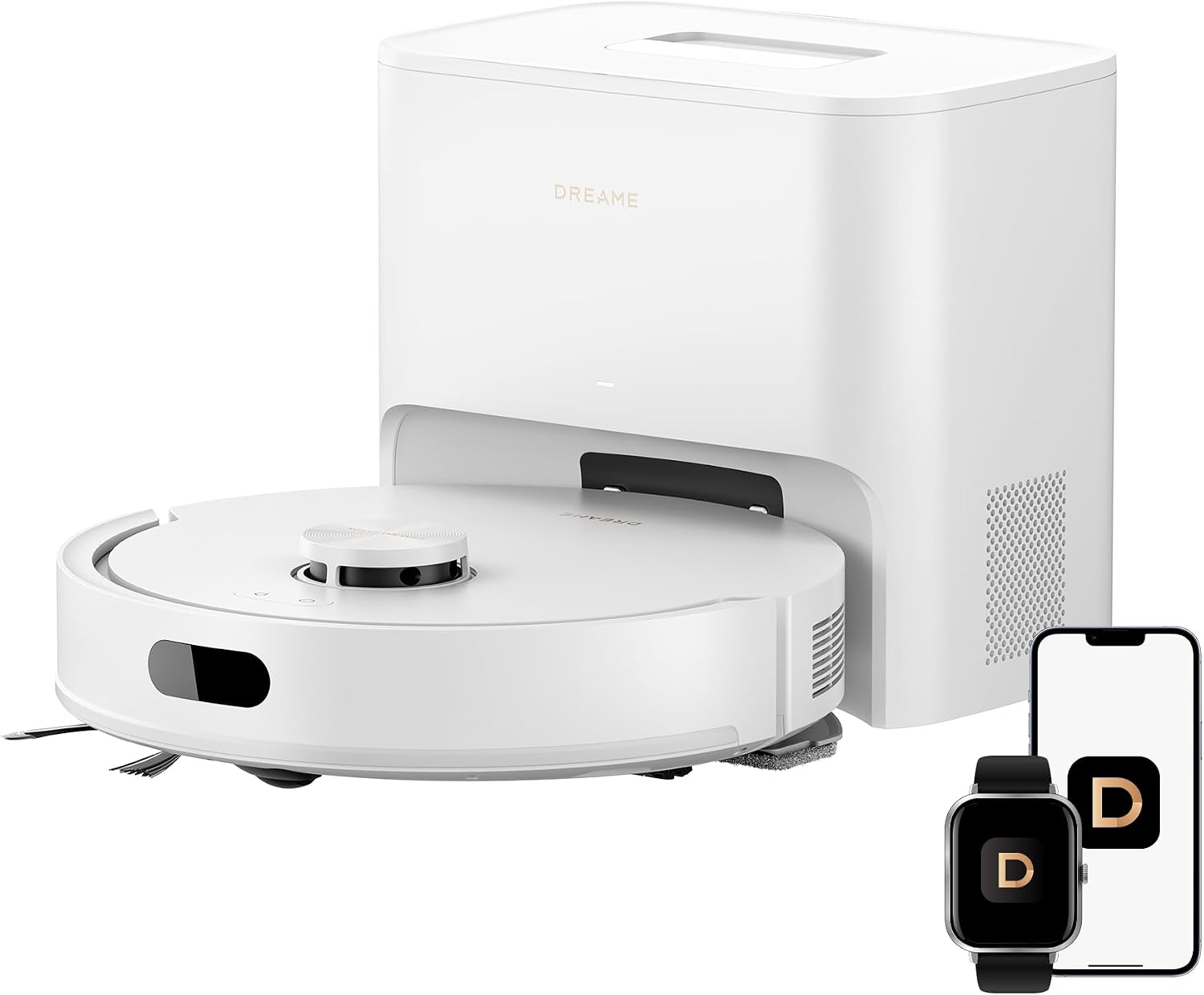
dreame D20 Air Plus Robot Vacuum and Mop, 20,000Pa Powerful Suction
Highest suction figure in this group, at 20,000 Pa, and a brand with a track record in the mid-tier
Listing leads with suction and says little about navigation, dock capacity, or mop hardware, so the fine print carries the weight
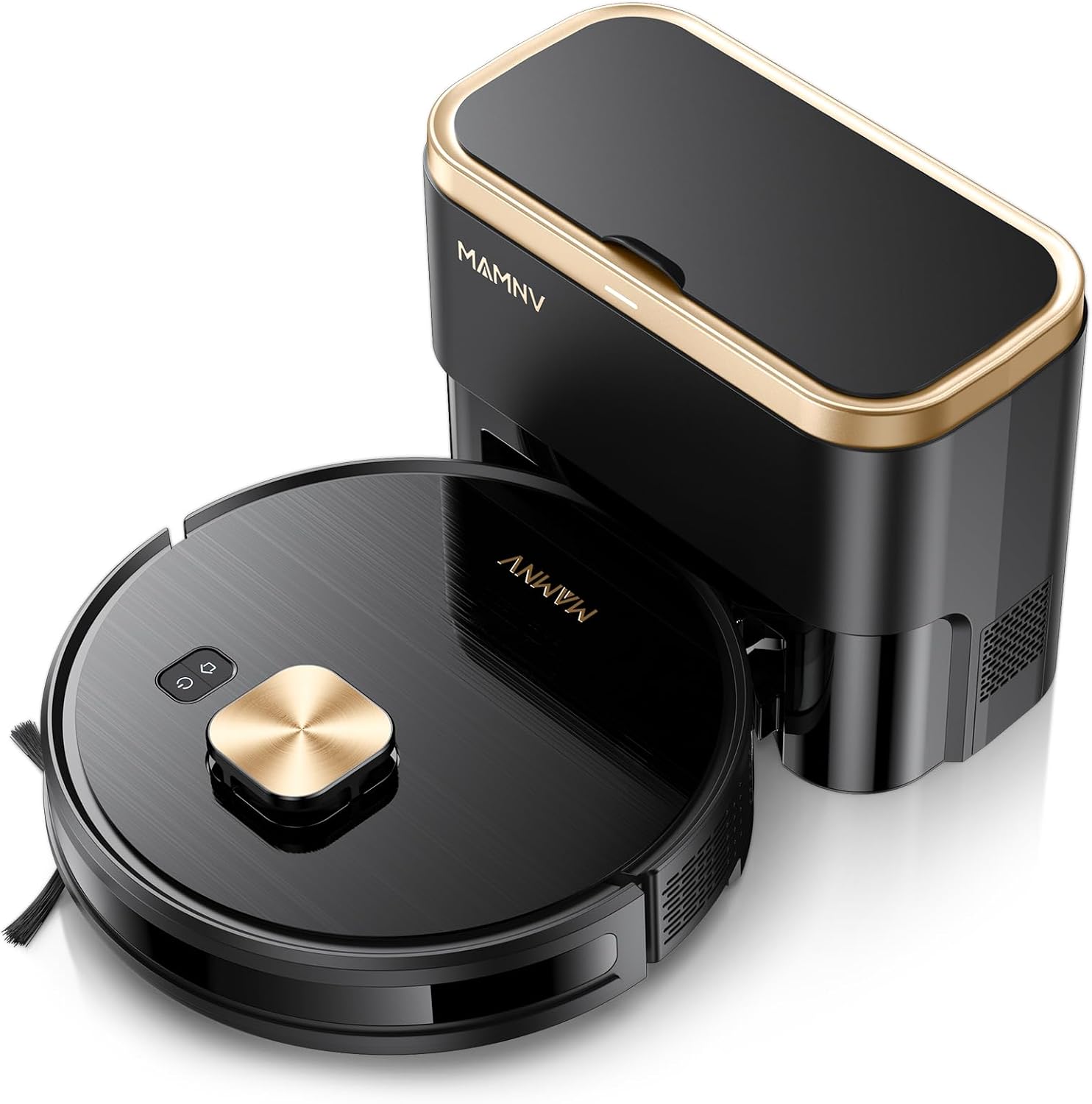
Robot Vacuum and Mop, 11500 Pa Suction, 3-in-1 with Smart LiDAR Navigation, 90 Day Self-Emptying, 160 Min Runtime
The only listing here that names LiDAR, and it adds a 90 day self-empty dock, 160 minute runtime, and app, Alexa, and voice control
11,500 Pa is the lowest suction number in the group, so it leans on navigation rather than brute force
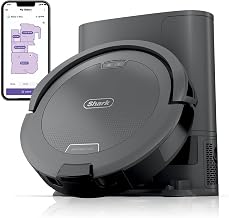
Shark Navigator Robot Vacuum + Self-Empty Base, Grey, RV2120AE
Self-empty base plus a brand with a long service record, which matters if you want parts and support later
The listing does not state suction, runtime, or navigation type, so you are partly buying the base and the badge
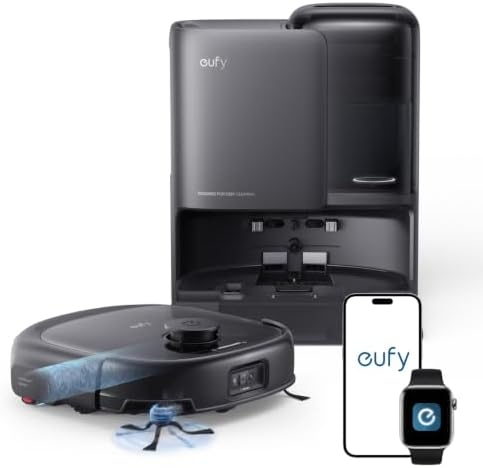
eufy E25 Robot Vacuum and Mop Combo, 20,000 Pa, HydroJet Roller Mop
20,000 Pa paired with a HydroJet roller mop, which is a genuinely different approach to mopping than a flat pad
Premium bracket, and the listing does not commit to runtime or dock capacity
Prices and availability were captured from Amazon Creators API and may change.
How I judge a self-emptying robot vacuum
A robot vacuum is a maintenance tool, not a replacement for your real vacuum. Anyone who tells you otherwise has not owned one for a year. So the questions I ask are boring ones. Can it find the dock from the farthest room without me? Does it get stuck on the same cord twice? What does the mopping do to a dried-on stain? Does the bin survive a week of two-dog hair? Would I trust it to run while I am at work?
Navigation is the first filter, and it is the one most buyers skip. Without real mapping, you get random navigation: bumping walls, re-covering the same corner three times, skipping the hallway entirely, and wedging itself under furniture until you drive it out in RC car mode like a remote-controlled toy. Suction means nothing if the robot cannot find the dock or gets stuck on the same cord twice. That is why the phrase "Smart LiDAR Navigation" in a listing is worth more to me than another 5,000 Pa of claimed power.
The second filter is the dock. Self-emptying is a convenience, not a "never touch your robot again" solution. Bags, filters, and the occasional clog still exist.
The dreame D20 Air Plus: suction as the headline
The dreame D20 Air Plus is the simplest pitch in this group. It is a robot vacuum and mop combo, and its listing leads with 20,000Pa of suction. That number is the highest in this comparison, and for a house with a husky and a lab, it is the number people gravitate toward, because pet hair is the real test and more airflow usually means less hair left behind on low-pile carpet.
The caveat is that a suction figure is one line of a spec sheet. The D20 Air Plus listing does not spell out its navigation method, its dock capacity, or the mechanics of the mop. Those are the details that decide whether you babysit the robot or forget about it. If you are comparing this against the 11,500 Pa LiDAR unit, you are essentially choosing between more claimed suction and more claimed intelligence, and only one of those two shows up on a marketing banner.
The 11,500 Pa LiDAR model: the all-rounder
The generically named 11,500 Pa robot vacuum and mop is the one I would hand to a friend who wants the fewest surprises. It is a 3-in-1 machine with Smart LiDAR Navigation, a 90 day self-emptying dock, 160 minutes of claimed runtime, and app, Alexa, and voice control. It is also listed as suited to pet hair, carpet, and hard floor, which is exactly the mix in my house.
On paper, this is the only unit here that answers the navigation question directly. A map and no-go zones change everything about how much you babysit the thing, because you can fence off the dog bowls, the cable tangle behind the TV stand, and the rug the robot always eats. The 160 minute runtime claim matters too, since 150 minutes claimed usually means "most of my main floor" in the real world, and a ranch-style layout with bedrooms down a hallway is the kind of floor plan that punishes a weak battery.
What you give up is raw suction. 11,500 Pa is the lowest figure in this comparison, roughly half the two 20,000 Pa machines. Whether that gap shows up on your carpet depends on your carpet, which is why I would not buy this one for a house full of thick pile.
Shark Navigator RV2120AE: the familiar name with a base
The Shark Navigator Robot Vacuum with Self-Empty Base is the unit people recognize before they read a single spec. Shark has been in floors for a long time, and that matters for a different reason than performance: parts, support, and the odds that a replacement filter is easy to find in two years.
The listing itself is thin. It names the self-empty base and not much else, so there is no stated suction, no stated runtime, and no stated navigation method. For someone who wants a brand they have heard of and a dock that holds the dirt, that may be enough. For someone comparing on the numbers, it is a frustrating entry, because you cannot tell from the listing whether you are getting mapped navigation or a robot that will spend its evenings under the sofa table.
My advice on this one is straightforward: if you buy it, treat the return window as part of the product. Run it for a week with your own furniture, cords, and rug transitions in place, and watch whether it finds the dock from the back bedroom. That single test tells you more than any badge.
eufy E25: the roller mop premium
The eufy E25 is the outlier. It pairs 20,000 Pa of suction with a HydroJet Roller Mop, and that combination is why it sits in a different bracket than the other three. A roller mop is not the same thing as the damp pad most robot mops drag around. It is a powered, self-cleaning style of mopping hardware, and it is the reason someone would pay premium money for this machine rather than a mid-tier combo.
If mopping is the reason you are shopping, this is the one to look at closely. If mopping is an afterthought and you mainly want dog hair off the hardwood, you are paying for hardware you will not use often.
The trade-off is information. The listing gives you suction and the mop system but does not commit to runtime or dock capacity, and those two numbers are what separate a robot you schedule and forget from one you have to rescue mid-run. On a 649.99-class machine, I want both spelled out before I commit.
What 90 day self-emptying actually means
The 90 day figure on the 11,500 Pa unit is the clearest dock spec in this group, and it is worth translating. It means the dock holds roughly 90 days of dirt under ideal conditions. It does not mean you ignore the robot for 90 days. Filters still need attention, bags still fill faster in a two-dog house, and hair wraps around brushes no matter how good the dock is. I empty my own bin every other day even on machines with a base, partly because I like seeing the dog hair and knowing it is gone.
So treat a self-empty dock as a convenience that removes one chore, not as a maintenance-free appliance. If a listing does not state dock capacity, as with the Shark and the eufy here, assume you will be checking it more often than you would like until you learn its rhythm.
Mopping is light maintenance, not deep cleaning
Robot mopping keeps everyday footprints off the floor. It does not touch dried-on stains or sticky spills, and any listing that calls it a deep clean is selling you something. I still hand-mop the kitchen after the robot's pass, and I do not consider that a failure of the robot.
Within this group, the eufy E25 is the only one with mopping hardware that suggests a step beyond the flat pad, which is the HydroJet roller system. The dreame D20 Air Plus and the 11,500 Pa unit both describe themselves as vacuum and mop combos without detailing the mop mechanism. The Shark listing does not emphasize mopping at all. If you want the robot to handle a sticky spill, none of these four is the answer. If you want it to keep the hardwood presentable between real cleanings, all of them are aiming at that job.
The pet hair question
Pet hair is the real test. If it cannot handle husky-level shedding, it does not matter how good the app is. Two 20,000 Pa machines in this group, the dreame D20 Air Plus and the eufy E25, have the suction headroom for it on paper. The 11,500 Pa LiDAR unit explicitly lists pet hair, carpet, and hard floor as its targets, which tells me the manufacturer at least thought about the use case, even with a lower number. The Shark listing does not make a pet hair claim either way.
Suction is only half of pet hair performance. The other half is whether hair tangles around the brush and whether the bin clogs, and neither of those shows up in a spec sheet. That is why the return window is your friend on any of these, and why I would run any new robot on the worst rug in the house first.
The trade-offs, plainly
If you want mapping and a dock that holds dirt for weeks, the 11,500 Pa LiDAR unit is the only listing here that promises both, and you accept lower claimed suction to get it.
If you want the biggest suction number and you already trust your own floor plan to be forgiving, the dreame D20 Air Plus gives you 20,000 Pa and lets you verify the rest yourself.
If you want a name you know and a base that swallows the bin, the Shark Navigator is the comfortable choice, with the least information to compare on.
If mopping is the point and budget is secondary, the eufy E25 with the HydroJet roller mop is the only machine here that treats mopping as a feature rather than a checkbox.
Which one to buy
For most houses with pets and a mix of hard floor and low-pile carpet, I would start with the 11,500 Pa LiDAR robot vacuum and mop. Navigation is everything, and it is the only one of the four that tells you up front how it navigates, how long it runs, and how long the dock lasts. You give up suction on paper, and on thin carpet that trade is usually fine.
Buy the dreame D20 Air Plus if you have thicker carpet or a heavier shedding problem and you are willing to confirm the navigation and dock details yourself before the return window closes. Buy the Shark Navigator if brand familiarity and support matter more to you than a spec sheet. Buy the eufy E25 if you have hard flooring throughout and you want the mopping to be the reason you spent the money.
Whichever you pick, run it for a week with your cords, rug transitions, and that one piece of furniture it will inevitably try to eat. That week tells you more than any comparison, including this one.