Buying a robot vacuum and mop in 2026 means reading a lot of numbers written by marketing departments. 25,000Pa. 18,500Pa. 10,000Pa. Self-emptying. 2-in-1. The problem is that none of those numbers tell you whether the thing will find its dock from the back bedroom, whether it will wrap itself around a phone charger, or whether the mop pad will do anything at all to a dried coffee ring. Those are the questions that decide whether you run the robot every day or shove it in a closet by month three.
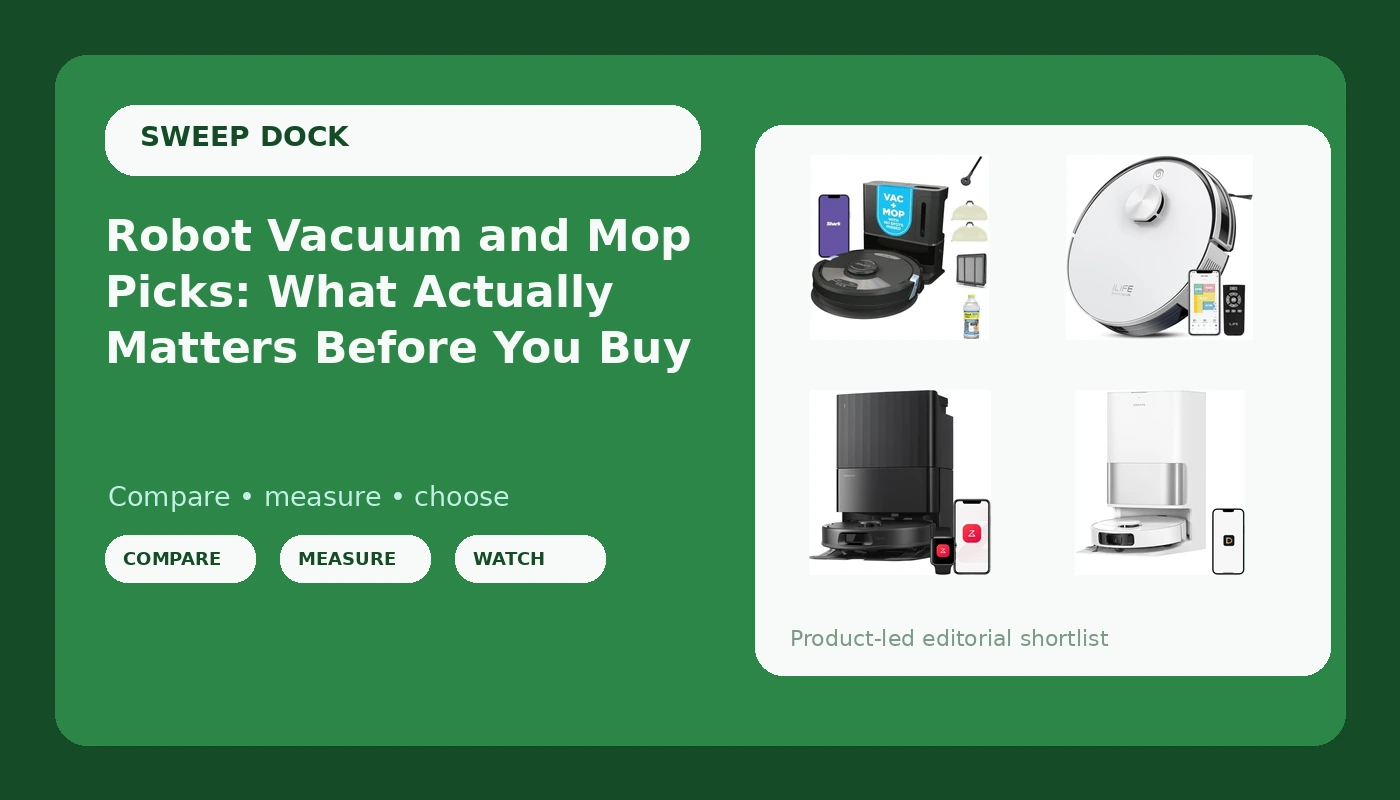
This comparison covers four current options by what their listings actually state, plus the mechanics you need to judge them: navigation, suction ratings, mopping expectations, and dock design. The group is the Shark Matrix Plus 2-in-1, the ILIFE A30s, the roborock 2026 New Qrevo S Pro, and the dreame D30 Ultra CE. They sit at different points on the price ladder, but the useful question is not which one is biggest on paper. It is which one matches the floors you actually have and the amount of babysitting you are willing to do.
Related: LiDAR vs random navigation: why mapping matters more than suction →
Quick answer
All four models here are robot vacuums. Three are named as vacuum and mop units, the Shark Matrix Plus 2-in-1, the roborock Qrevo S Pro, and the dreame D30 Ultra CE, while the ILIFE A30s is named as a vacuum with a stated 10,000Pa max suction. Among these records, the dreame D30 Ultra CE carries the highest stated suction figure at 25,000Pa, the roborock Qrevo S Pro states 18,500Pa, and the ILIFE A30s states 10,000Pa. The Shark Matrix Plus does not state a suction figure in its name. Stated suction is a manufacturer figure, not a measured result, and nothing in a product name supports calling any of these the quietest, the most reliable, or the best overall. Check each listing for navigation type, dock behavior, and mop design before you decide.
4 useful options
| Model | Best fit | What stands out |
|---|---|---|
| dreame D30 Ultra CE Robot Vacuum and Mop | High-suction pickup on carpet and pet hair | States 25,000Pa suction, the highest figure in this group |
| roborock 2026 New Qrevo S Pro Robot Vacuum and Mop | Buyers who want a current premium model | 2026 refresh of the Qrevo line with 18,500Pa stated suction |
| SharkMatrix Plus 2-in-1 Robot Vacuum & Mop | A mainstream name-brand 2-in-1 | Sold as a vacuum and mop in Black/Brass, model AV2610WA |
| ILIFE A30s Robot Vacuum | Entry-level budgets | States 10,000Pa max suction at the lowest positioning of the four |
The suction leader: dreame D30 Ultra CE Robot Vacuum and Mop
A 25,000Pa figure is a pressure rating, and pressure is only one part of pickup. Brush design, how well the housing seals against the floor, and how much debris the bin holds before airflow drops all matter just as much. Still, if you have two shedding dogs and low-pile carpet in the bedrooms, this is the record here that leads with suction rather than with app polish or price. Treat the number as a starting point for the listing, not as a result.
The premium pick: roborock 2026 New Qrevo S Pro Robot Vacuum and Mop
The honest trade-off with a premium model is that you are paying for refinement, not for double the cleaning. Mapping accuracy, dock behavior, and app reliability are the parts of the experience you notice every single day, and they are also the parts that budget robots get wrong most often. If the 2026 Qrevo S Pro includes a self-emptying dock and proper laser mapping, that is the value. If it does not, the suction figure alone does not justify the positioning, so read the listing carefully.
The mainstream 2-in-1: SharkMatrix Plus 2-in-1 Robot Vacuum & Mop
A 2-in-1 label tells you the machine can do two jobs, not that it does both equally well. On these units the mopping side is light maintenance: it lifts everyday dust and footprints from sealed floors, and it does not replace a real mop for sticky or dried-on messes. The vacuum side is the part that runs daily. If the Shark listing shows the navigation and dock features you want, the brand familiarity is a genuine plus for people who would rather not troubleshoot.
The budget entry: ILIFE A30s Robot Vacuum
Budget robots are judged by what they cost, not by what a flagship does. Expecting premium behavior from an entry-level machine is how people end up disappointed, and the realistic trade-off is that you will supervise it more: more stuck events on cords, more manual rescues from under furniture, and a shorter window before the bin needs emptying. What you should still insist on at this level is a real cleaning pattern rather than random bouncing, because that single difference determines how much of your evening the robot costs you.
Prices and availability may change. Product images, names, and retailer links must be matched by verified ASIN. Do not state a current price, rating, stock status, or measured result without current evidence.
How navigation and mapping change the experience
Suction gets the headlines, but navigation decides whether you actually use the robot. A machine with random navigation bounces off walls, re-covers the same corner three times, and can miss the hallway entirely. It also struggles to return to its dock, which means you find it parked under the sofa table with a dead battery. A machine with laser mapping builds a floor plan, cleans room by room in a systematic pattern, and knows where the dock is from the far end of the house.
Mapping is also what makes no-go zones possible. If you have a tangle of cables behind the TV stand, a set of dog bowls that get pushed around, or a rug with tassels the robot likes to eat, no-go zones let you fence those areas off in the app instead of physically blocking them with furniture. That feature only exists on robots that maintain a map, so it is worth checking for the navigation hardware rather than accepting vague phrases like "smart navigation" in a listing.
None of the four product names here states the navigation type. That is not a red flag on any individual model; it simply means you have to open the listing and look for laser or time-of-flight mapping language, a mapping feature list, or app screenshots showing a floor plan. If a listing cannot tell you how the robot knows where it is, assume the answer is that it does not, and budget your expectations accordingly.
What a suction rating actually measures
Suction ratings are given in pascals, which measure pressure. Pressure helps lift debris out of carpet fibres, but it is not the same as airflow, and it says nothing about whether the brush roll tangles around long hair, whether the bin clogs after a week of dog fur, or whether the filter clogs and quietly reduces performance. Two robots with the same pascal figure can pick up very different amounts of husky hair.
For pet hair, the practical details are the brush design, the size of the bin, and how easy the bin and filter are to clean. For carpet, the height the housing sits at and how well it seals to the floor matter as much as the number on the box. For mopping, the design of the mop matters more than the word "mop" appearing in a title: a vibrating pad or a roller system does more than a passively dragged cloth. Robot mopping is light maintenance. It handles footprints and everyday dust, and it does not touch dried-on stains.
- Measure the rooms you actually want covered and note the floor types in each one.
- Decide whether you need mapping and no-go zones, then look for laser or time-of-flight navigation in the listing rather than marketing phrases.
- Decide whether mopping is a real requirement or a nice-to-have, and if it is real, look at the mop design rather than the product title.
- Decide whether a self-emptying dock matters to you, and pick a spot for it with clearance on both sides and a nearby outlet.
- Write down the deal-breakers first, such as pet hair capacity, cord tangles, rug transitions, and where the dock will live, then compare the four models against that list.
Practical guidance for real houses
- Pick up phone chargers and thin cables before a run. Cords are the single most common cause of a robot stopping mid-job, and no suction rating solves it.
- Check rug transitions. Thick thresholds and tasselled edges stop more robots than carpet depth does.
- Place the dock against a wall with clear space either side, not tucked behind a door where the robot has to guess its way in.
- Empty the bin and rinse or replace the filter on a schedule. A full bin drops airflow and makes a capable machine look weak.
- Run the robot while you are home for the first week. You will learn its failure points quickly, and you will not come home to a dead robot under the couch.
- Treat mopping as a maintenance pass. It keeps sealed floors presentable between real cleanings, and it is not a substitute for a mop and bucket.
Which option should you choose?
Choose the dreame D30 Ultra CE Robot Vacuum and Mop when stated suction is your priority and you want the highest figure in this group for carpet and pet hair pickup. Choose the roborock 2026 New Qrevo S Pro Robot Vacuum and Mop when you want a current premium model and you are willing to pay for mapping and app refinement. Choose the SharkMatrix Plus 2-in-1 Robot Vacuum & Mop when you want a vacuum and mop combination from a familiar brand without flagship positioning. Choose the ILIFE A30s Robot Vacuum when budget sets the ceiling and you accept that you will supervise the machine more often.
None of these recommendations rest on measured testing, and none of the product names confirms navigation hardware, dock design, or bin capacity. Verify those details in each listing, and treat every stated suction figure as a manufacturer claim rather than a result.
The bottom line
The right robot vacuum and mop for your house is the one whose navigation, dock, and maintenance demands match how much attention you are willing to give it. Stated suction separates these four on paper, with the dreame D30 Ultra CE leading at 25,000Pa and the ILIFE A30s lowest at 10,000Pa, but the daily experience comes down to whether the machine maps your floor, avoids the cords you forgot to move, and finds its dock without help. Confirm navigation type and dock behavior in the listing first, then let suction and price break the tie.